ServicesFlat Roofing
Flat Roofing for Tempe Homes
Low-slope roofs leak at seams, drains and parapet walls. We find where the water really gets in, photograph it and list each cost on paper before work begins, for a patch or a full new roof. If the damage might be an insurance matter, we explain the claim steps.
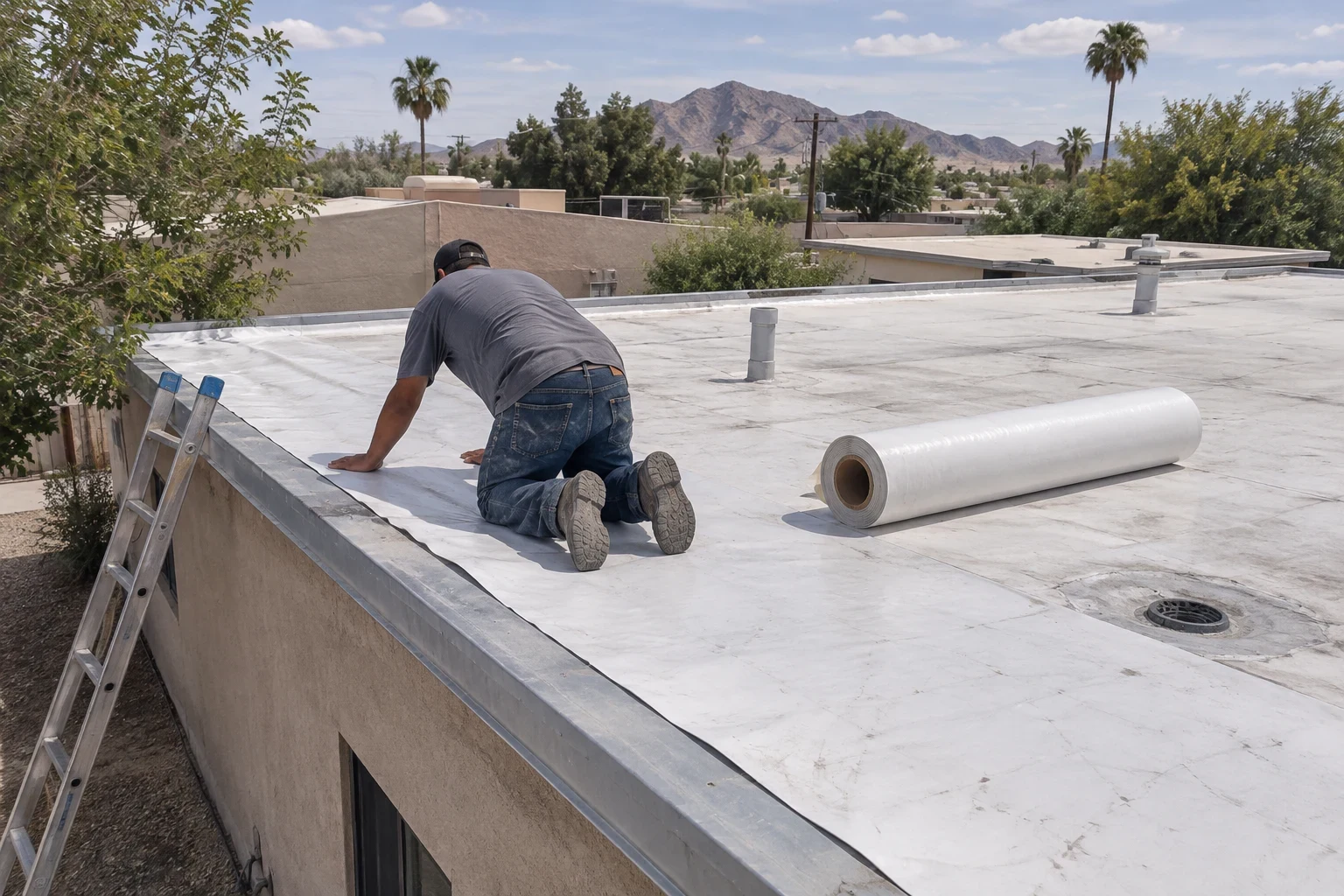
What flat roofing covers and when it makes sense
A flat roof isn't really flat. It has a slight pitch that moves water toward scuppers or drains. When the pitch, the membrane or the seams fail, water sits and finds a way in. We work on the common systems: modified bitumen, built-up roofs with gravel, and roll roofing over additions and carports. If foam fits your roof better, we'll say so and point you to our foam roofing page.
Sun does most of the damage. Long stretches of desert heat dry out asphalt membranes, open seams and crack the flashing at parapet walls. Then a monsoon storm dumps a lot of water fast, and every weak spot shows up at once. Sometimes a repair is enough. Sometimes the layers underneath are wet and the honest answer is a new roof. We tell you which, and why.
If wind or hail did the damage, we photograph it and write down what we found, so you have something clear to hand your insurance company. We don't act as your adjuster and we won't promise what a claim will pay. We just walk you through the steps.
What the work includes
- Tracing leaks at parapets and penetrations
- Most flat roof leaks start where the roof meets something: a parapet wall, an AC stand, a vent pipe or a skylight curb. We check those spots first and trace the water to where it actually enters. That's often a few feet away from the stain on your ceiling.
- Membrane and seam repair
- Blisters, splits and lifted seams get cut out, dried and patched with matching material. We don't smear tar over a wet spot and call it fixed.
- Scupper and drain work
- Clogged or undersized scuppers cause ponding. We clear them, reflash them and build up low spots so water runs off instead of sitting.
- Tear-off and replacement
- When the membrane is worn out or the deck below has gone soft, we strip it down, replace bad decking and install a new system with proper slope. Our roof replacement page explains how a full job runs.
- Reflective top surface
- A light-colored cap sheet or coating bounces back sun and slows the drying that ages a flat roof. We'll explain which finish suits your roof and your budget.
- Photos and written records
- You get photos of the problem areas and a line-item estimate. If you file a claim, those records help you show the adjuster what happened.
Signs your flat roof needs attention
Water still sitting days after rain
Ponding that hangs around 48 hours after a storm means the slope or drains aren't working. Standing water wears out any membrane faster.
Blisters and bubbles
Raised pockets mean moisture or air is trapped under the surface. Heat makes them grow until they split.
Cracked, alligator-like surface
A roof that looks like dried mud has lost its oils to the sun. If it isn't leaking yet, it's close.
Stains high on walls under a parapet
Brown marks near the top of an inside wall usually point to open flashing or a loose wall cap above it.
Bare spots on a gravel roof
When the gravel wears away, the black asphalt underneath bakes in direct sun and starts to break down.
What moves the price of a flat roof job
We don't price a flat roof from the street. Cost depends on how big the problem is and what's under the surface. Your estimate lists each piece so you can see where the money goes.
Size of the area
A patch at one scupper is a small job. A full tear-off over the whole house is a different one. Square footage drives material and labor.
Condition of the deck
If the plywood under the membrane is soft or soaked, we replace those sections first so the new roof sits on solid wood. We can't always see that until the old layers are off, so we explain up front how we'll handle it.
The system you choose
Modified bitumen, built-up gravel and coated surfaces each cost differently to install and keep up. We'll lay out the trade-offs.
Parapets and penetrations
Every AC stand, vent and wall edge needs its own flashing. More of them means more detail work.
Layers, haul-off and permits
Removing several old layers adds labor and dump fees. A full replacement may also need a permit, which we pull.
How a flat roof job goes
- 1
The phone call
You tell us what you're seeing and where in your home. We set a time to come out and get on the roof.
- 2
On the roof
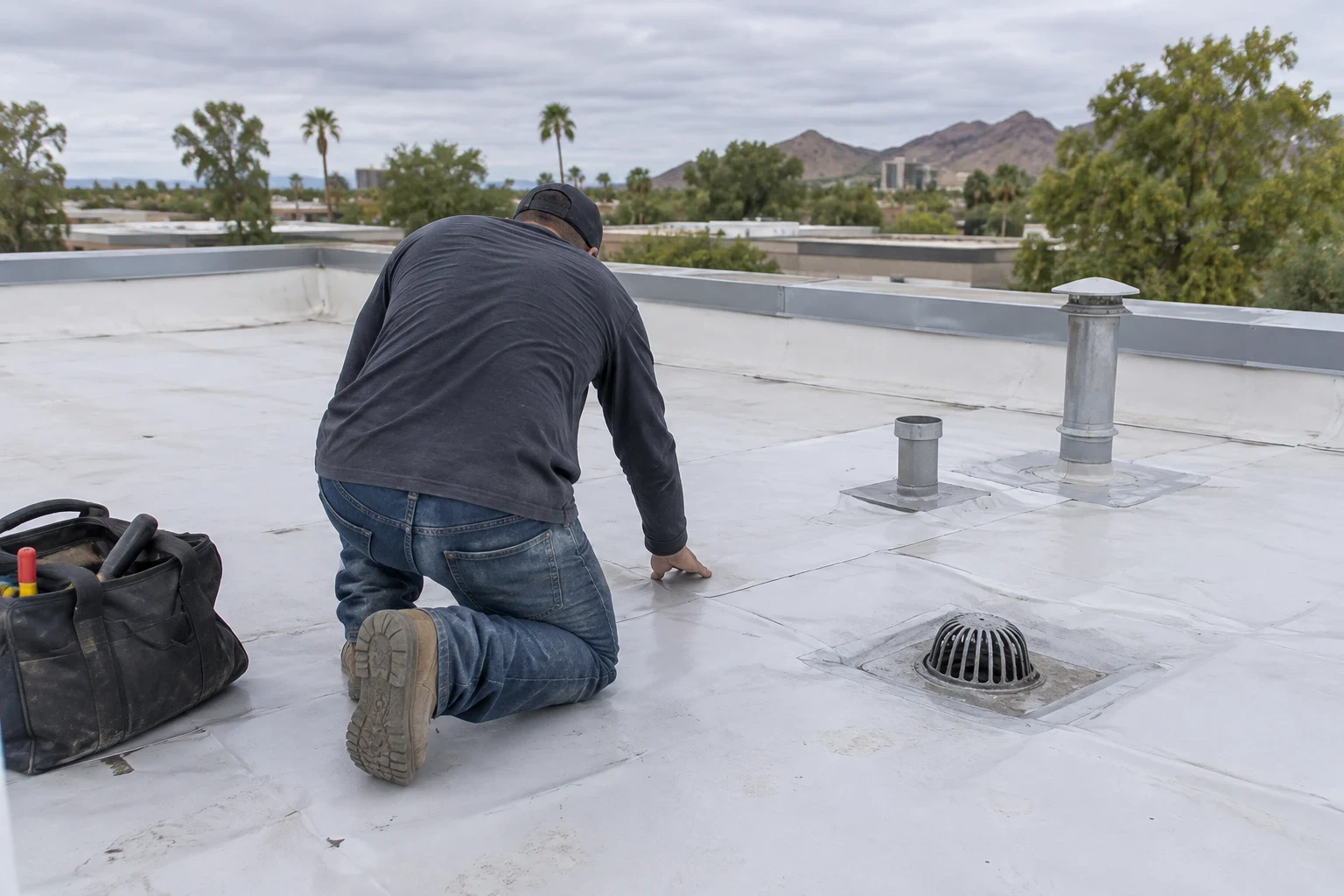
We walk the whole surface, check seams, flashing and drains, and probe for wet spots. Every problem area gets photographed, so you're looking at the same evidence we are.
- 3
Written estimate and a straight answer
You get a line-item estimate and our honest call on repair or replacement. If the damage looks storm-related, we explain how a claim usually works and what an adjuster tends to ask for.
- 4
Work day
We protect your yard and anything along the walls, keep debris in the bin and leave the roof sealed at the end of each day. Smaller repairs often wrap up in a day. Replacements take longer, depending on size.
- 5
Final walk-through
We walk the finished roof with you, pick up nails and scraps, and go over the 10-year labor warranty on our work.
Flat roofing questions
Can my flat roof be patched, or does it need replacing?
It depends on how much of the roof is affected and whether the layers underneath are dry. A few bad seams or one failed flashing can be repaired. If the surface is cracked all over or the deck is soft in several spots, patching just buys a little time. We show you photos and tell you which way we'd go.
Will insurance pay for my flat roof?
That's up to your policy and the cause of the damage. Insurers usually look at sudden damage like wind or hail, not wear from age and sun. We document what we find with photos and notes and explain the process. The adjuster makes the decision, and we won't tell you a claim is a sure thing.
Is foam better than a membrane for my roof?
Foam works well on many flat roofs, especially ones with lots of penetrations. Membranes can make more sense on some additions and carports, or where the deck needs work anyway. We'll explain both, and our foam roofing page has more detail.
What state credential covers your flat roof work?
We are an Arizona KB-2 licensed contractor. That covers the flat roof repair and replacement we do on your home.
What warranty comes with the work?
Our flat roof work comes with a 10-year labor warranty. We go over it with you before the job starts so you know what you're getting.
Get a straight answer on your flat roof
Tell us what you're seeing. We'll come out, take photos and give you a written estimate, along with a plain read on whether the damage is worth taking to your insurance company.