ServicesFoam Roofing
Foam Roofing in Tempe
We spray new foam roofs, recoat worn ones and fix the spots that leak. Before any work, we walk the roof, take photos of what we find and tell you plainly whether it needs a recoat, a repair or new foam.
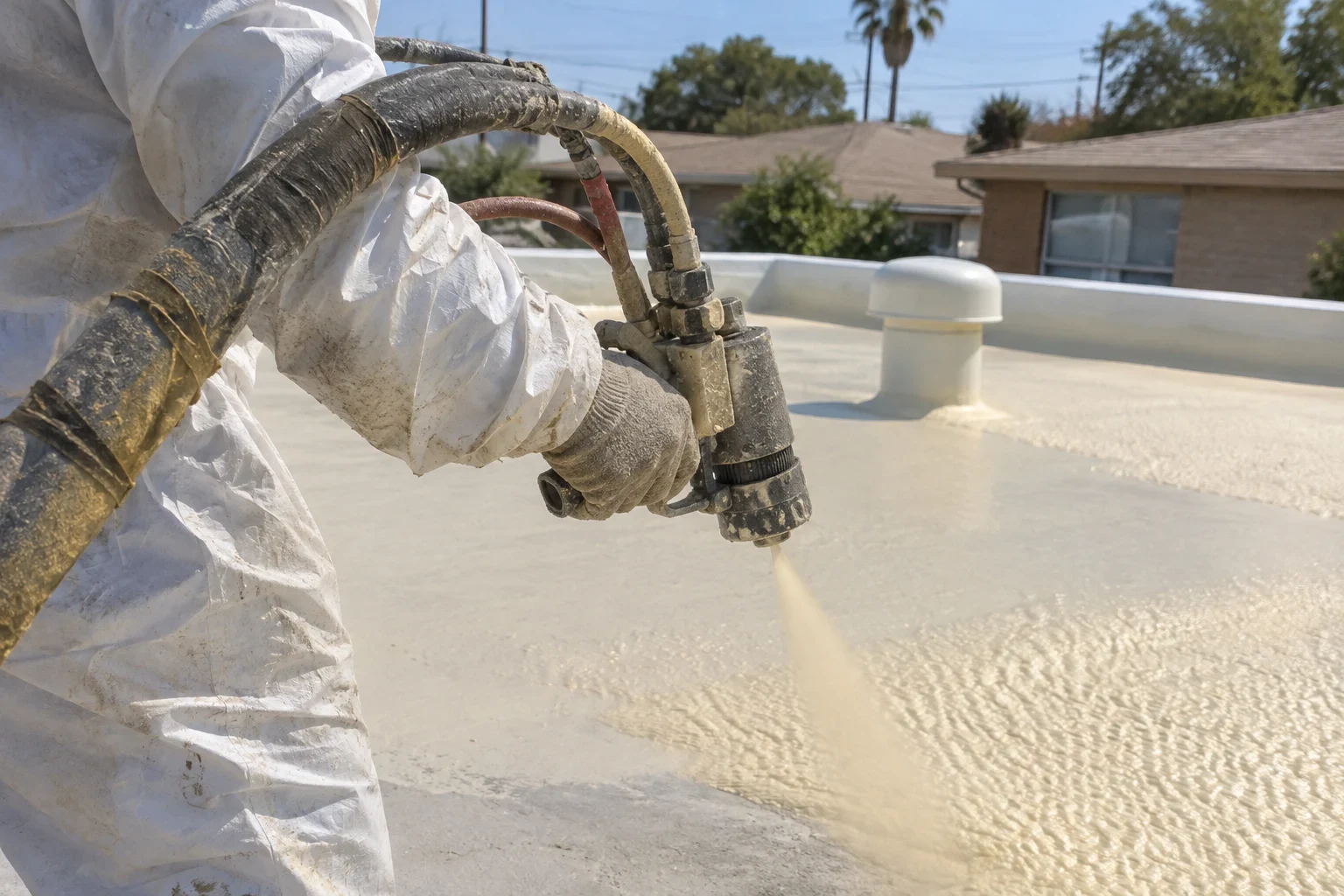
What a Foam Roof Is and When It Makes Sense
Spray polyurethane foam goes on as a liquid and swells into one solid layer over your roof deck. There are no seams for water to find. It also adds insulation, which matters on a flat roof that sits under hard sun all summer.
The foam itself is not the weak point. Sunlight is. Foam breaks down fast once it is exposed, so it needs a coating on top, usually acrylic or silicone. Keep that coating in good shape and a foam roof can last a long time. Let it wear through and the foam turns brown, then powdery, then wet.
We are an Arizona KB-2 licensed contractor. On foam jobs we start with what is actually up there, not what we would like to sell. Plenty of foam roofs just need a recoat. Some need patching. A few need the wet foam cut out or a full new roof, and if yours is one of those, we will show you why.
What Our Foam Roofing Work Covers
New spray foam roofs
We spray foam over a clean, dry deck or over a sound existing roof. We build up thickness where water sits so the roof drains toward the scuppers and drains.
Recoats
We clean the roof, fix small damage and lay down fresh coating at the right thickness. A recoat on time is the cheapest way to keep a foam roof working.
Spot repairs
Bird pecks, blisters, cracks around AC stands and torn spots from foot traffic get cut out, filled with foam and recoated so the patch is sealed like the rest.
Wet foam removal
Foam that has soaked up water has to come out. We cut it back to dry material and rebuild that section before any coating goes on.
Edges and penetrations
Parapet walls, vent pipes, skylight curbs and scuppers are where most foam roofs leak. We seal and coat those details with extra care.
Signs Your Foam Roof Needs Work
Brown or powdery foam
If you can see tan or brown foam and it rubs off on your hand, the coating is gone. The sun is eating the roof now.
Chalky, thin coating
Coating chalks and thins with age. Once you can see the texture of the foam through it, a recoat is due.
Small holes and pecked spots
Birds love to pick at foam. Each little hole lets water in.
Blisters or soft spots
A bubble or a spot that gives under your foot often means water is trapped underneath.
Water that sits for days
Ponding after a rain wears coating out faster and points to low spots that need building up.
Stains on your ceiling
A leak inside usually traces back to a parapet, a pipe or a crack. Finding the source matters more than patching where the water shows up.
How a Foam Roofing Job Runs
- 1
We look and take photos
We walk the roof, probe soft areas and photograph what we find. You get those photos and a plain answer on recoat, repair or new foam.
- 2
Written quote and permit
We go over a line-by-line quote with you. If the job calls for a permit, we pull it.
- 3
Prep day
We sweep and power wash the roof, cut out wet or damaged foam and mask walls, windows and AC units so overspray stays off your home and your car.
- 4
Foam and coating
We spray only when the roof is dry and the wind is calm. Foam goes on in passes, then a base coat and a top coat. Most homes are done in a few days, and you do not need to be home.
- 5
Cleanup and walk-through
We pick up the masking and debris, check the drains and show you the finished roof.
What Moves the Price of a Foam Roof
We do not quote foam work off a photo or a guess. The price comes from what we find on your roof, and we explain each line so there are no surprises later.
- Recoat, repair or new foam
- A recoat on sound foam costs far less than spraying a new roof. That is why we check before we quote.
- How much is wet
- Every section of soaked foam or rotten deck we cut out adds labor and material.
- Size and thickness
- More square feet means more foam and coating. Adding thickness to fix low spots and slope also adds material.
- Coating type
- Acrylic and silicone coatings differ in cost and in how they handle ponding water. We tell you which fits your roof and why.
- Parapets, pipes and access
- Lots of walls, vents and AC stands mean more detail work. A roof that is hard to reach takes more time to set up.
Foam Roofing Questions
Something not covered here? (480) 613-7195
How often does a foam roof need a recoat?
That depends on which coating was used and how thick it went on. Have someone look at it every few years and recoat once the coating wears thin. If you wait until bare foam shows, the job costs more because the damaged foam has to be repaired first.
Can you spray foam over my old roof?
Often, yes, as long as the old roof is dry and well attached. If it is holding water or pulling loose, it has to be torn off first. We check it before we tell you one way or the other.
Will my insurance pay for my foam roof?
No one can promise that, and anyone who does is guessing. Sudden damage, like hail strikes, may be covered, while wear from sun and age usually is not. We hand you photos and notes on what we found and walk you through how a claim tends to go. The adjuster decides what gets paid.
What warranty comes with your foam work?
Foam roofing work we do is backed by a 10-year labor warranty. Ask about the terms while we put your quote together, and we will spell out what is included and what is not.
Acrylic or silicone coating, which is better?
Silicone holds up better on spots where water sits after a rain. Acrylic costs less and does fine on roofs that drain clean. We choose based on how your roof sheds water.
Find Out What Your Foam Roof Needs
Tell us what you are seeing up there or on your ceiling. We will talk it through and set a time to look at the roof and get you a quote.